
Fiber cement board: what it is, what it's used for and why it lasts
What fiber cement board is, where it can be used from facades to bathrooms, and what makes it so durable. A short guide before you choose.
- fiber-cement
- guide
- technical
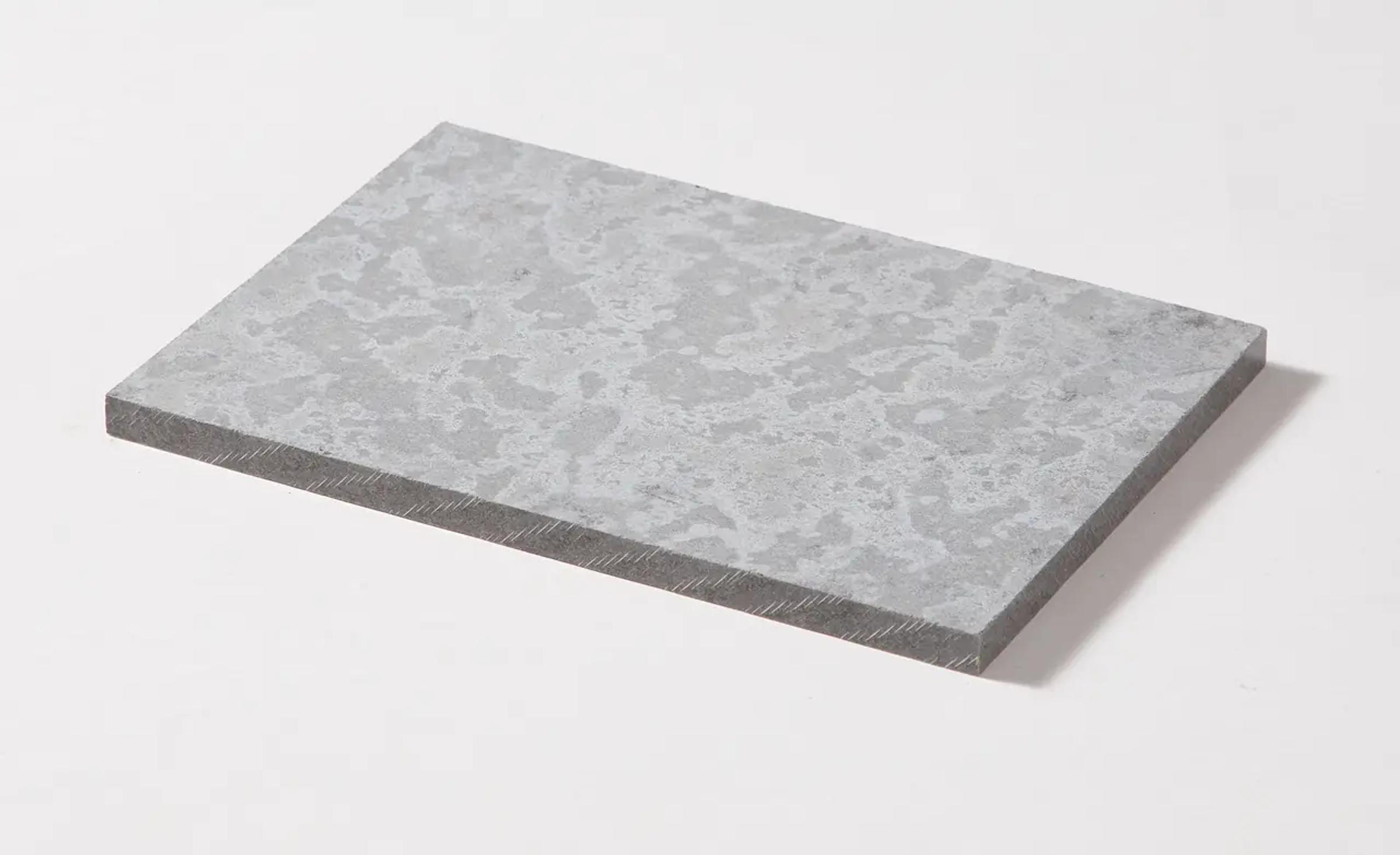
Fiber cement board is a high-strength building board made of cement, cellulose fibres and mineral fillers. It is used for facade cladding, interior walls and ceilings, wet rooms, floors and decks. It lasts because it does not burn, rot or warp, and it resists frost, rain and UV radiation. This article sums up what you should know before you choose.
What is fiber cement board?
Fiber cement is essentially "fibre-reinforced concrete" in the form of a thin board. The cement provides hardness and strength, while the fibres add flexibility: they hold the material together so the board resists bending and impact and does not break as easily as a plain cement panel. During production the boards are pressed and cured, giving a dense, uniform and dimensionally stable product.
The fiber cement boards we distribute are 100% asbestos-free, as stated on every product data sheet. This matters because many people still associate fiber cement with old asbestos-containing slate, although today's boards are a completely different material.
What is fiber cement board used for?
One of the biggest advantages of fiber cement is that the same base material is made into boards for many tasks – density, thickness and surface vary.
- Facades: the Facade Board is through-coloured, available in 10 colours and several surfaces, for ventilated facades.
- Wood-look exterior cladding: the Wall Plank has a cedar grain, but needs no painting and does not rot.
- Wet rooms: the Moisture Board is made for bathroom and kitchen walls and ceilings, while the Backer Board provides a stable base for tiles and mosaics.
- Interior walls and ceilings: the lightweight Thermo Board is recommended for partitions and suspended ceilings.
- Floors and decks: the Floor Slab for floors in steel-frame buildings, and the Deck Plank as a durable alternative to wood and WPC.
Why does it last so long?
The service life of fiber cement board comes from the structure of the material, not from a surface coating. Some properties recorded in the technical documents:
- Non-combustible: several of our products (for example the Backer Board and the Deck Plank) are fire class A1, so they do not contribute to the spread of fire.
- Dimensionally stable: the boards do not warp or ripple, even when exposed to moisture.
- Weather-resistant: according to the National Technical Assessment A-62/2025, the Facade Board's weathering resistance is class "A" (freeze–thaw, heat–rain, wet–dry, water permeability), and the Deck Plank resists moisture and frost.
- No rot: unlike wood, the cement-based material does not decay, and insects do not damage it.
- Strong: the Facade Board has a bulk density of 1510 ± 150 kg/m³ (National Technical Assessment A-62/2025), giving impact resistance and long-term stability.
Facade boards are also through-coloured: the pigment runs through the full thickness, so a scratch does not reveal a layer of a different colour. We wrote about this in detail in our article on the through-coloured Facade Board.
Fiber cement or calcium silicate?
The two materials are often confused. Fiber cement board is a general building board for facades, interior walls and floors. Calcium silicate boards are mainly used for passive fire protection: protecting steel structures, ducts, fire-rated partitions and ceilings. If the task is specifically about fire protection, this is the direction to consider – we are happy to help you choose the right system.
What to consider when choosing
- Where will the board go: outdoors or indoors, a dry or a wet area?
- What look do you want: smooth, wood-look, coloured or grooved?
- What substructure will it be fixed to, and with what fixing (visible or concealed)?
- Does it have to meet fire safety requirements?
Fiber cement board is easy to work with: it can be cut and drilled with standard tools, and when fixing it you should follow the manufacturer's instructions so the board can move freely.
Ask for advice or a sample
Tomzol-Trade Kft. distributes premium fiber cement and calcium silicate boards. If you are not sure which board suits your project, tell us what you are planning and we will help you choose – we can also send colour samples. Write to us: info@tomzol.com.