
Shades of grey
Space Grey, Light Grey, Dark Grey – three greys, three different moods.
- facade-board
- colours
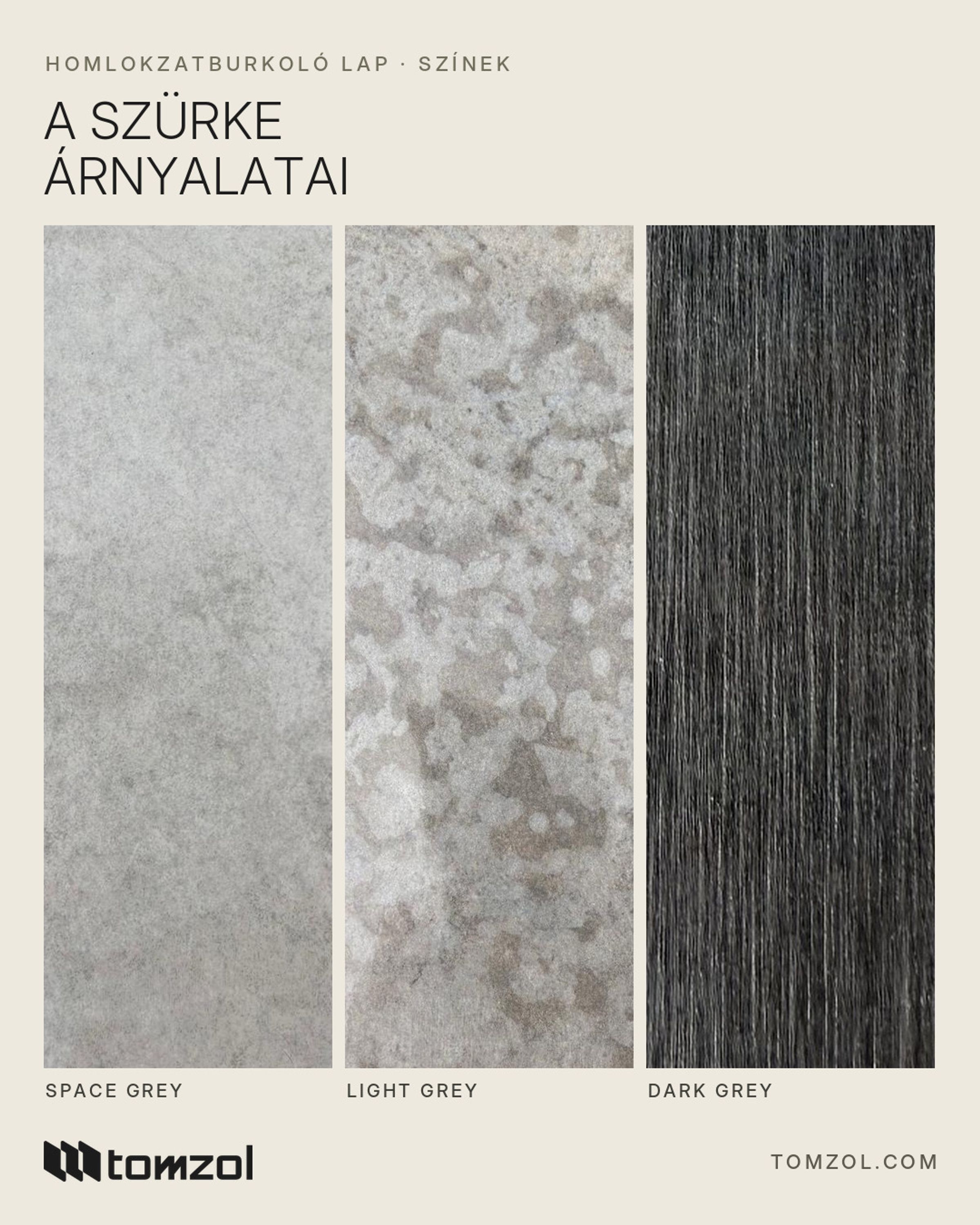
For many people, grey is the 'safe' colour: not loud, not tied to fashion, yet modern. In reality, there is no single grey. The facade board colour range includes three shades – Space Grey, Light Grey and Dark Grey – and each gives a building a completely different mood. In this article we show when to choose which, what to pair them with, and how to decide confidently which one suits your house.
Three greys, three characters
Space Grey, Light Grey, Dark Grey – three greys, three different moods. The difference lies not only in lightness but also in how the building's mass and proportions come across.
- Space Grey – the lightest grey: fresh and clean, it stays light even on large surfaces.
- Light Grey – a balanced, neutral middle ground that fits into almost any setting.
- Dark Grey – a distinctive, elegant shade that gives a bold, contemporary look.
The light shades make a building's mass feel lighter, while the dark one gives a distinctive, elegant look, especially next to wood or glass.
When to choose which?
A good colour choice starts with the size of the building, its surroundings and its orientation. A few practical points:
- On a smaller house or an enclosed plot, the light greys create a more spacious, airy impression.
- On a large building with a simple form, Dark Grey gives a clear outline and emphasises the clean shape.
- If you want to highlight a projecting volume, the plinth or the entrance area, combine: a light main surface with a dark accent – or the other way round.
- Dark colours heat up more in the sun; keep this in mind on south- and west-facing facades, where lighter shades can be the more comfortable choice.
What to pair grey with
Grey is a rewarding colour because it works with almost any material. It pairs especially well with:
- wood – its warm tone balances the coolness of grey; together they feel friendly yet modern;
- glass – next to large glazed areas, Dark Grey creates a frame-like, elegant effect;
- black or anthracite windows and doors – on a light grey wall they create a sharp, graphic contrast;
- the warmer shades of the range – next to Ivory or Beige, for example, grey forms a restrained, harmonious pair.
Tip: since all ten colours of the facade board are made of the same material, different shades on one facade still look like a single, coherent system.
Surface and durability
All three colours are available with polished, textured and natural surfaces. The polished surface is finely sanded and smooth; the textured one is slightly structured and matt; the natural one is stone-like, with a marbled, cloudy pattern. The same grey plays with light differently on each surface, so it is worth choosing the surface together with the colour.
The facade board is through-coloured: the colour runs through the full thickness of the board, so it keeps its shade without painting. Fiber cement is a material with more than a century of history – Ludwig Hatschek patented it around 1900 – and today's boards are 100% asbestos-free.
Key technical data according to the National Technical Assessment A-62/2025:
- Board sizes: 1220 × 2440 and 1220 × 3050 mm; thicknesses: 8, 9, 10, 12 and 15 mm
- Reaction to fire: class A1, non-combustible
- Weathering resistance: class “A”
- Bending strength: at least 13 N/mm²; density: 1510 ± 150 kg/m³
How to decide
The differences between the greys are subtle, so the colour you see on screen is rarely enough to decide. Look at the sample outdoors in daylight, in the morning and in the afternoon, and hold it next to the windows or the wood cladding you want to combine it with. On a whole facade the same colour usually looks lighter than on a small sample. For one building, order all boards in a single order from one production batch if possible – this gives the most even shade.
Which one would you choose: Space Grey, Light Grey or Dark Grey?
Would you like a colour sample or have a question? Write to info@tomzol.com or call: +36 30 959 6537