
IVORY – light, but not sterile
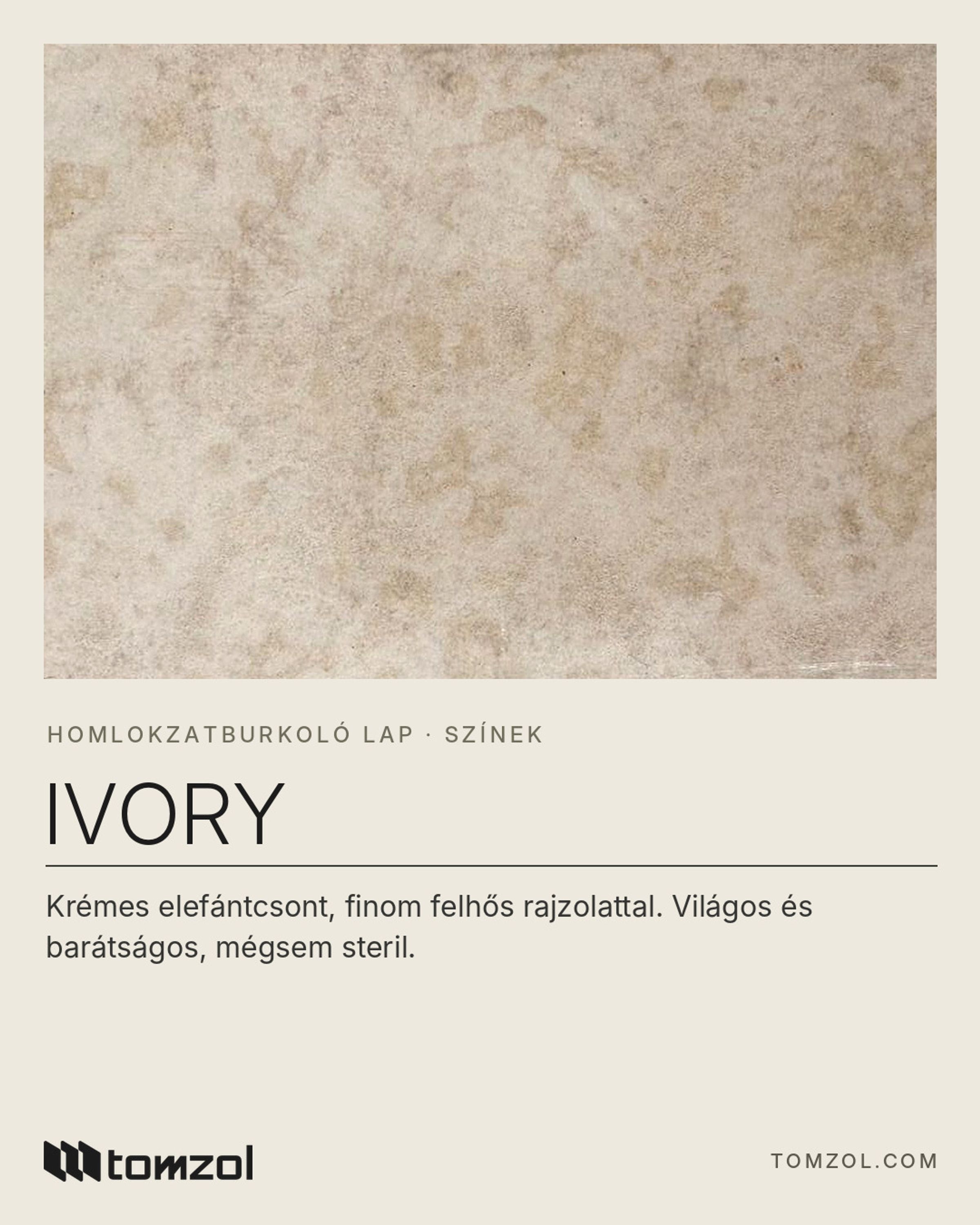
A fine, cloudy pattern runs through the creamy ivory base tone: tactile up close, calm and uniform from a distance.
- facade-board
- colours
A white facade? Many people shy away from it, finding it too cold, too sterile, almost clinical. Ivory dispels exactly that feeling. It is a light colour with a spacious feel, yet it has warmth and a sense of material. In this article we show what makes this shade special, what to pair it with, and what to keep in mind when planning a light-coloured facade.
What does Ivory look like up close and from a distance?
A fine, cloudy pattern runs through the creamy ivory base tone: tactile up close, calm and uniform from a distance. This duality gives the colour its character. Standing at the entrance, you sense that this is a real, solid material; seen from the street, the building appears as a clean, harmonious volume.
Even on large surfaces it looks bright and friendly. Where pure white would seem dazzling or harsh, the soft, warm tone of Ivory adds understated elegance.
What to pair it with
Ivory is one of the most rewarding base colours, because it holds its own alongside almost any architectural style. It works particularly well with:
- dark windows and doors – anthracite or black frames create a sharp, graphic contrast on the light wall;
- wooden details – the warmth of decking, a front door or a wood-look canopy brings out the creamy base tone;
- modern, minimalist buildings – with clean massing, Ivory lets proportions and lines speak for themselves.
Tip: if you want to highlight certain parts – a projecting volume, the plinth or the entrance area – darker shades from the ten Facade Board colours, such as Chocolate or Dark Grey, provide a good contrast next to Ivory. Since they are made of the same material, the surfaces read as one coherent system.
Light-coloured facades – what to watch out for
A light colour is not just an aesthetic choice. A few practical points worth considering in advance:
- Light colours heat up less in the sun, so they can be a pleasant choice even on south- and west-facing facades.
- Look at the sample outdoors in daylight – both in the morning and in the afternoon. Indoor lighting and screens distort colours, which is especially noticeable with creamy shades.
- Allow for the surface effect: across an entire facade the same colour usually looks lighter than on a palm-sized sample.
- Dirt is noticed sooner on light surfaces, so careful detailing of sills, flashings and drip edges matters all the more here.
- For one building, order the boards in a single order from one production batch if possible – this gives the most even shade.
Lasting colour without painting
The Facade Board is through-coloured: the pigment does not sit on the surface but is present throughout the full thickness of the board. Ivory therefore keeps its colour without painting, and if an edge is damaged, the same shade shows underneath. Fiber cement is a material with more than a century of history – Ludwig Hatschek patented it around 1900 – but today's boards are 100% asbestos-free.
The key technical data according to National Technical Assessment A-62/2025:
- Board sizes: 1220 × 2440 and 1220 × 3050 mm; thicknesses: 8, 9, 10, 12 and 15 mm
- Surfaces: natural, polished and textured
- Fire classification: A1, non-combustible
- Weathering resistance: class “A”
- Bending strength: at least 13 N/mm²; density: 1510 ± 150 kg/m³
In ventilated facade systems the board can be used on family homes, residential, commercial and industrial buildings, in facade renovation, and as cladding for balconies, loggias and soffits.
The photo shows the actual colour sample.
Would you like a colour sample or have a question? Write to info@tomzol.com or call: +36 30 959 6537